Thursday, 5 July 2018

The Most Achingly Beautiful Book I've Ever Read (Probably)

I picked up American Girl by Baird Wells (writing as Iowa Riley) in response to a social media post. I'd no idea really what to expect except that I'd read a couple of Baird's blogposts and been amusingly impressed by one and deeply moved by the other.


I have always loved trying to spot connections and influences that shape people's writing. Looking back now at those blog posts I see resonances then.

The first post was advice to men about talking to women at conventions. More specifically a ballsy blast of the trumpet of reproach in response to some male authors who think conventions are a phone free tindrfest - fingers raised to swipe left or right at every female face they see."how-to-talk-to-women-at-cons-probably"


The second post was a poignant reflection on friendship in the direst of adversity and what one can or should do with the time we have together."the-time-we-are-given"


Both those themes swirled soulfully together in this soft whirlpool of a story about a writer, Kate Archer, her career and her relationships. There is a point where one character claims in exasperation that the protagonist latest book is about him and Kate replies with the line and the thought

"...it's not." No more than the soil is about the colour of a rose.

It's an astute (almost meta) comment on the struggles of writing in a book of and about writing and writers.

Life experiences - for good or ill - may be the fertile ground that fuels authorial imagination. But, despite that indefinable link between fact and fiction, the story that emerges is a different thing.  It is at its best - as in the American Girl - a beautiful and fragile thing way beyond any earthy origins in the soil of Riley/Wells' experiences.

This intimate first person point of view story follows Kate Archer through two different timelines. The present story begins in Portugal, the past story a year or so earlier, the one building to a point of earth moving crisis, the other reeling in the recurring aftershocks.

Braided through both past and present stories are the would-be lover Rob and the friend Natalie. The one is an author, gifted but insecure, craving reassurance as much as companionship, the purveyor of hackneyed lines like the ones that Wells brilliantly punctured in her blog post

"No One Has EVER Told Me I Have Beautiful Prose Before" 

The other is that life long companion, the sister in all but name and blood, who has traded vulnerabilities, shared heartbreak and healed wounds since they were old enough to cross the street unaided.

In different ways these two key figures provide succour to Kate confined within an increasingly barren marriage more by habit and parental expectation than love or understanding.

This is a book about writers and writing, how the people and the craft interact and mingle.  Wells/Riley smoothly captures the heady holiday atmosphere of writing conventions represented here by an invented London Litfest; The easy creeping intimacy of conversations conducted over social media - confidences shared, borders skirted - or crossed. The opportunity through the internet to foreshorten geography so that people can be tempted to stray across continents without ever leaving their own homes.

But this book is not about the means or mechanisms by which relationships can be threatened or formed - it is about what happens next. As the onion layers of husbands and lovers, parents and friends are peeled away Wells/Riley shows us painful credible truths about people and how they can hurt and ultimately how they can heal.

She does with prose that is beyond beautiful - at times exquisite.  At every page turn with my kindle I found a fresh line to note and murmur acknowledgement at a idea so elegantly expressed.

This from the man who ... negotiated his way back to beer a night like a dog creeping onto an off-limits sofa.

"I am proud! but one of us has to come first, and I'm begging you to make the sacrifice." His eyes are wet and wide when he says this. He's not sorry for asking me to be less; he's sorry that I don't know I should be. 

...acquaintances peer to decipher our body language but know better than to ask. They feel it too, the contagious rush, the amphetamine momentum of two people falling into trouble. 

The red A-line makes a reappearance five years later. It's a bit more snug through the waist but nothing that has me reading Cosmo fitness articles.

There is so much about this book that appeals to me -

  • the fresh science similes with which Wells/Riley calls on Schrodinger, Hawking and the metamorphosis of caterpillar into butterfly
  • the world of writing and publishing evoked in all its paradoxes. At once mutually supportive yet fiercely competitive, confidently assertive yet cripplingly insecure.
  • the way Wells/Riley evoked Lisbon and Paris and London and the Azores as surely as if I lived there. 
  • the passing nods to history and literature, Anne Boleyn cut short, the Wizard of Oz de-curtained, the Great Expectations Kate has of her rental accommodation


But it is the people, their flaws and foibles as colourful and fragile as butterflies that felt so real, that led me so ardently through their story and had me murmur oh my god, on more than one occasion. 


Sunday, 5 November 2017

4th Time round and Still the Charm (I re-review Pretty Little Dead Girls).

I've just finished re-reading Mercedes M Yardley's gentle masterpiece "Pretty Little Dead Girls" for the fourth time.  The joy of a kindle is that I can mark up fresh notes to myself when different lines caught my eye, and also refresh my memory on old notes from previous readings. On page 220 I found myself adding to "I cried at this bit" with "and again on reread 4 even though I knew it was coming somewhere."

Just some of the freshly caught lines include

"her mind went cottony with despair and panic"

"the car was silent except for the rain and the gallantry of the windshield wipers"

"a grim smile crept onto his lips and held them hostage."


I have written about this book before (here,and here). A book about a beautiful girl who is doomed by fate to be horribly murdered does not, at first hearing, sound like a barrel of laughs or joy. However,  for all darkness at its core there is in it a joyful whimsical celebration of life. It is my absolute go-to re-read for the distraction of some uplifting escapism whenever the vagaries and demands of real working life weigh particularly heavily on me.

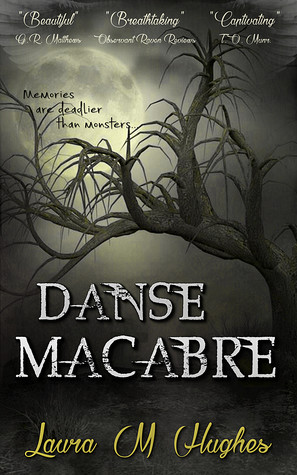
It quite defies categorisation being unlike any other book I have ever read. The only novelette/novella that matches it for brilliantly written unique but lyrical strangeness is "Danse Macabre" by Laura M Hughes - which I have reviewed here on Goodreads (reviewed it twice in fact - another book I felt compelled to reread). 

I can only hypothesise that having that M as an author's middle initial must have something to do with this particular gift.


.

Monday, 30 October 2017

I don’t get out much, but when I do… I drink and I learn things


Reflections on an October trip to Bristol and Bristolcon2017

Counting back the fantasy related gatherings and events that I have attended, it only just used up the fingers of one hand.
  • The Grim Gathering in London in August 2014,
  • The Grim Gathering in Bristol in April 2015,
  • Bristolcon in September 2015
  • Bristolcon in October 2016
  • Bristolcon in October 2017

However, like successive books in a much loved fantasy series, these experiences seem to be getting progressively bigger and better. There is a vibrant and growing online community of fantasy fans who are seizing the opportunity to meet in person in convivial surroundings. Those who miss out one year enviously watch and comment on events unfolding through social media with one hand, while booking tickets for the next year’s event with the other.

There is nothing quite like meeting people in person for fleshing out the typed comments and avatar images of social media with actual faces, anecdotes and even accents.

The Bristolcon team did another excellent job of setting up a cosy but intriguing one day convention.  I have not yet been to Worldcon, but I have gathered that it can be a sprawl of size, variety and people in which individuals can get lost in a crowd of mingled conference goers and general public. Bristolcon with its relatively compact Hilton Doubletrees venue and adjacent generous hotel bar space, has instead a wonderfully intimate atmosphere.

Over the course of three days and two nights I got to attend panel discussions, a fringe event at Waterstones, try out local restaurants in full fantasy geek/nerd company, spend a lot of time with some wonderfully entertaining and generous people and even visit my local favourite author for tea!

So what are my key takeaways from Bristol (and by that I mean learning points, not the many pizzas – great though they were - that Kareem ordered from the long suffering local emporia)?

What have I learned from Bristolcon?


Reasons to be cheerful about science, Sci-Fi and Fantasy?

The panel about how the upcoming scientific and world challenges and advances may influence fantasy/science fiction got quite bleak quite quickly. The authors found lots of potential for post-apocalyptic realities on which future writers could draw (scratching their books out on cave walls beneath the shadow of a nuclear winter.)   GRMatthews' geography background dragged him into a perspective of pessimism with his glaciers always seeming to be half full. However, between them the panel identified the self-driving canoe as the not-yet-invented-but soon-to-become-essential item.  You heard it here first, invest in those startups now.

Info dumps may not be all bad.

The panel on info-dumps decided they had their place in fantasy provided they were kept sufficiently compact and perfectly formed. Though according to Peter Newman, authors may lavish their greatest subtle info-dumping technique on the first book in a series and then becoming more functional at a stage where the author feels secure in the loyalty of their readers. Perhaps this is in the same way that people doll themselves up to the nines for a first date, and yet relax into jeans and sweatpants a few dates down the line.

Bristolcon again welcomed many visitors from overseas, travelling distances great and small. Dyrk, Petros, Marielle, Julia, Andreas, Sadir and Rita may have experienced a certain bafflement at being thrown into the miniature portrait of cultural variety that is the United Kingdom.  Their experiences suggest that infodumps may not be just be a (hopefully well-judged) staple of fantasy – but an essential tool in the survival kit for real life tourists. A means to answer those essential questions; What is black pudding? How can you wash your hands without a mixer tap? Which side of the car should a passenger try and get into? and Why did 1.00 am happen twice on Sunday morning?  The panel's final advice from Juliet McKenna was that writers should travel widely and – as they do so – “notice what they notice” if they want to get know what a traveller in fantasy land might need to pick up on

Not all partners have the stamina for fantasy.

One trend in Bristolcon seemed to be that a number of partners who made it to the event last year, did not return for a second time. Andreas, Julia Kitvaria-Sarene’s husband is an honourable exception. He not only returned for a second year but heroically videoed some of the later bar shenanigans (past 5 in the morning) for the benefit of (future generations’ entertainment/personal blackmail purposes/the police investigation)*
*delete which ever does not apply.  

One of my favourite films is “Truly, Madly, Deeply” starring Juliet Stevenson as the desperately bereaved girlfriend who is benignly haunted by Alan Rickman as the ghost of her dead boyfriend. The companionable haunting enables her to come to terms with grief, to realise that the boyfriend has moved on and to do the same herself.  But a key scene occurs when Rickman starts bringing his fellow ghosts back to their house to have parties, watch films, and generally hang out, while a bemused Stevenson exclaims from the bath “What, there are dead people in my living room?”

In some ways that community of fantasy writers and readers reminds me of Rickman and his new-found friends – which is not say that we are all dead – just that there is a fellowship there that not all partners can understand, enjoy or come to terms with. But they also serve who only stay at home and wait, so those partners who let us all get away by ourselves deserve our thanks for their (slightly mystified) indulgence.

Other takeaways


  • That Julia gives the best presents, although even booksellers occasionally have to deal with assholes in their working life. It does sadden me that anybody with enough regard for books to go into a bookshop in the first place could be a git when they get there.
  • That Kareem’s anecdotes once heard can never be unheard and sharing the experience doesn’t lessen the pain, no matter how often Graham Austin-King tries it.
  • That Ed Macdonald has an alarmingly good theoretical grasp of how to fend off knife attacks and Anna Stephens knows how to make the assailant stab himself with his own knife. I have to say the technique worked perfectly when I used it a dream on Saturday morning.  Running away, however, always seems the safest option, particularly if you are with a friend who cannot run quite as fast as you.
  • That RB Watkinson won the prize (I think) for getting the most out of Bristolcon by virtue of having had the least total hours slept over the course of the weekend.
  • That Dominick Murray knows more about turtles than any man (or woman) should.
  • That hotel night-managers are wonderfully patient and understanding people.
  • That my efforts at self-promotion should probably have meant more than mentioning to a couple of people in the bar that Lady of the Helm was free on Amazon for the whole three days of Bristolcon related events.
  • That making your excellent and very reasonably priced editor (albeit an increasingly busy editor) cry with your writing (or weep as she verbally edited it for me) is not actually a bad thing. As Gandalf put it “I will not say do not weep, for not all tears are an evil.”  Though at various points in the weekend we seemed to be seeing more @halfcutharp than @halfstrungharp.     
  • That I am very grateful to Mark Lawrence for his blog posts about Bristolcon past, for the competitions based on his writing and his sponsorship of SPFBO. This has done so much to bring together people who would otherwise never even have known each other existed, let alone been energised enough to descend on Bristol to meet in person. I know Kareem Mahfouz because I saw a picture of his chest hair shaved to spell out Prince of Fools at the same time that I had mown the grass in my garden to spell out the same title. I know Laura M Hughes because she entered a piece of entertaining flash fiction in a Thatthornguy competition that Agnes Mezsaros kindly invited me to judge.  I am sure many others have similar tales of chance Lawrencian connections.
  • That Celyn Lawrence has the best cheeky smile and surely the reddest hair in Bristol. (All the best fantasy heroines have red hair, or at least so says the author of Lady of the Helm.)  That Celyn means holly in welsh and is pronounced ke-lin not kay-lin and definitely not seline. 


Friday, 21 July 2017

A Marked Story - my review of "Ismark, the Marked boy" by JH Lillevik

I first met this story at an early stage in its development, when the author shared some initial thoughts and drafts with me and few other friends on social media.  I find it an exciting and privileged position to be able to see how the story has developed from its early stages to this final published novel. 


The story has many dark elements. We join Lillevik's eponymous hero Eirik the marked boy when he is a brutally mistreated slave in a mining community, part of the half conquered land of Ismark.  From there Eirik's life takes a series of turns for the worse in a succession of trials that would test the fortitude of a saint. However, Eirik survives where others do not, and finds spiritual strength in the midst of debilitating physical weakness. Sustained by dream-like memories of friends, relatives and homes he has lost, he strives to adapt to the challenges and opportunities of rapidly changing circumstances.  

At 271 pages, the book is relative short for a fantasy epic and this allows it to start at a reasonable pace and accelerate rapidly as it approaches its shattering conclusion. I can see where some of the authorial excursions on those initial drafts have been trimmed back to allow us to get to grips more quickly with Eirik's journey - both in geographical and developmental terms.

The world building is intriguing. Various nations struggle against the might of the Sorian Empire, in its determination to subjugate the rest of the world through military or economic might. The Sorian's reminded me of many historical and fictional archetypes, most notably Rome, or ancient China. However, one particularly memorable character put me in mind of none other than Jabba the Hut from Star Wars. 

The Sorians built their empire by stealing cities from a sophisticated dwarven civilisation and Lillevik leaves a few loose threads hanging, temptingly - to assure us that dwarves have a bigger part to play in Eirik's story than the magnificence of their architecture.

There are other characters too, besides Eirik and his immediate Ismarkian associates, that the reader will look forward to hearing more from: Master Cal - the inept Sorian merchant; Rhun - the Wrenian spy and his charming companion Amalie; Kef - the Sorian with friends in high places and swords with sharp edges.

Lillevik's writing is a little raw in places, and there is the occasional misplaced word or typo which a skilled editor's eye might have tidied up.  However, the story has at its heart the endurance and triumph of the human spirit. There were times, when I felt we were being told rather than shown the characters' experience of and reaction to adversity, but Lillevik's eagerness, in this his debut novel, is understandably to convey the shape and urgency of his story.

As E.M.Forster said nearly a century ago in Aspects of the Novel "The story... can only have one merit: that of making the audience want to know what happens next." Lillevik's story - with its nicely judged denoument - succeeded in that,                   


Saturday, 8 July 2017

A Story with Heart, - my spoiler free review of "Court of Lions" by Jane Johnson

Decades ago I studied History at A'level - including a paper in European History from about 1480 to 1680.  My revision strategy consisted of stringing together every incident of European History and making them but branches from a single stem of "Why did Spain decline in the 1600s?"  It was a sure bet as this precise essay question had come up on every exam paper since before even my History teacher had been born.

That long ago study came back to me as I read Jane Johnson's glorious twin tale. In essence it is two stories separated by half a millenium, but conjoined in Geography. Johnson follows two parallel threads - a double helix if you will, not so much intertwined as touching gently on each other - with points of connection as light yet poignant as a lover's kiss.  This is a story of duality - at once a present day mystery taut with tension and conflict and yet also a piece of historical fiction vividly bringing a lost world to life,

In the present day we follow Kate, a woman with a bruising past taking a far from secure refuge in the back streets of Granada. In the past we ride with the strangely named Blessings - companion to the boy prophesied to be the last Sultan of Granada.

My school boy study of Spain began with the reigns of Ferdinand of Aragon and Isabella of Castile, As formidable a pair of monarchs as Henry II of England and Eleanor of Aquitaine - though the legacy of the Spanish Catholic Monarchs has endured better than Henry II's Angevin Empire. Blessings' account has the same starting point as my A'level European History, but sheds an alternative light on the deceptive (arguably duplicitous) simplicity of Ferdinand and Isabella's crusade against the moors.

Tolerance is another theme that seems to run through the book, in both the sense of being accepting of difference, and also in the sense of to tolerate or put up with something. Kate is a woman who has tolerated too much. The worm has not so much turned as run and - in Kate's case - run  to a place that was once celebrated for its tolerance, indeed its celebration of diversity.

Today we live in interesting times, and Johnson's book reflects that. Fear, prejudice and zealotry simmer below the surface of any civilisation and the parallels between the past and the present are easy to draw.

However, neither in Kate's tale nor Blessings' does Johnson fall into the trap of casting either side as wholy saints or sinners.  The moors of Granada have their bloody villains, as crimsoned as any grimdark anti-hero. The christians of Castile and Aragon have their honourable champions alongside their venal sovereigns. But the conquest of Granada still ranks alongside that of the American midwest, or aborginal Australia, as an episode of human history littered with dishonour and broken treaties. Once again history greatest gift to the winners has been to allow their perspective on events to be the one best preserved for posterity - and Johnson's novel offers a different slant on that history.

Blessings stands watching from the margins of history, harbouring secrets great and small, trading in them yet driven always by a purity of love to which all other considerations are ultimately subordinate.  His voice is convincing, his tale compelling - told in Johnson's effortless liquid prose.

Kate in her journey meets similar prejudiced zealotry as she struggles to emerge from a shell into which great trauma had driven her. Yet she is endlessly drawn to the Alhambra the Moorish palace around which both Blessings' and her own story revolve.

The writing is at its most convincing when describing the people, the culture, the food even of those whose lives straddled and still straddle the Straits of Gibraltar. The author's fondness - passion even - for the places, the period and the people add well defined flesh to the bare bones of the story.

Kate's past trials - while truly dreadful - do not have quite the depth of flavour that we get when the story stalks the streets of Granada. We are necessarily removed from the events in England - which are described either as past occurrences or through panicked telephone conversations. In such circumstances it is difficult to deliver the tension of a full blooded thriller. Nonetheless, Kate's story provides an engaging counterpoint to Blessings' and brings something of that lost age into the present.

A book's power is best felt in what the reader does when it is finished. Does the story's grip persist beyond the last page? In the case of The Court of Lions, I scoured through the author's notes before throwing myself at Google to research for myself the captivating events Johnson had described.  

As to my long History A'level - gentle reader. Well that year for the first time in centuries the History paper did not have a "Why did Spain Decline?" question, instead there was a different question.  "How did Portugal break free from the Spanish Yoke?"  So I wrote "Portugal broke free of the Spanish yoke because Spain declined." - and then wrote my planned essay.
  

Sunday, 4 June 2017

The Grey Bastards, by Jonathan French. A spoiler review

I try to observe a rule not to read other people's reviews of something that I've read until after I have written my own, lest their opinions should colour mine.  So I am writing this review of The Grey Bastards in some haste so I can freely indulge my curiosity about what other friends and reviewers have thought of this brilliant and fascinating tale.

Of the last twenty books I have read, The Grey Bastards will be the fourth that I have been introduced to via Mark Lawrence's Self-Publishing Fantasy Blog Off. This is, I think a testament to the competition's success in lifting some very good books above the noise signal and anti-selfpublishing snobbery that has hidden some remarkable talents from a wider audience.

The Grey Bastards came first in the 2016-17 contest and is an extremely well polished book - even if its protagonists are as rough as sandpaper toilet tissue. The story's feet appear planted in the Dungeons and Dragons milieu of my youth - huge birds called rokh and amorphous digesting blobs called black sludges could have sat quite happily between the pages of the Monster Manual. The Grey Bastards are themselves a troop (or rather a hoof) of hog riding half-orc cavalry who we see and bond with through our point of view protagonist - Jackal. Jackal himself, is young, ambitious and - if not exactly handsome - at least less intrinsically ugly than others of his kin.

Make no mistake, this is a brilliant book, that challenges the reviewer only in knowing where to begin tackling the task of describing it, much as one might wonder how to bring down Jackal's brother in arms the mountainous and formidable thrice blood - Oats.

Thrice bloods are one of French's many linguistic, cultural or even biological developments that add a deep and rich additional dimension to what - in other hands - might have been a mere parade through a flat role playing campaign.  The half-orcs are all bastards, beget by orcish rapes - fierce and formidable fighters the various hoofs have become part of the Empire's defense against orcish incursions. Thrice bloods are the most formidable half-orcs, born of a half-orc mother and an orc father. The half orc hoofs - and other re-purposed denizens of familiar myth - each patrol their own parcel (or lot) of the near lawless borderlands between the orcs and the empire. The lots are a barren dangerous place - home only to those who have no other place to turn to - a wild land that makes the wild west look like a kindergarten's playground - where the only safety is in the mutual loyalty and reliance of belonging to a group.

I daren't say too much more of the plot - this is a book to discover for yourselves.

It is perhaps fair to warn you that - from the very outset - the tone and language of our half-orc hero and his friends is beyond bawdy, beyond coarse and yet all the more believable for it. These are the roughest of rough soldiers bound by the close knit camaraderie and carnal preoccupations of many a troop of specialist mercenaries operating under near constant duress. I have seen the like of their crude language previously only in Jeff Salyards' coarse-tongued Syldoon soldiers who rode through the Bloodsounder's arc trilogy.  However, the fluent variety of the Grey Bastard's cursing might raise a blush even in Lieutenant Muldoos.

However, the story is no testosterone driven male monopoly. The female characters - Fetching (the half-orc warrior), Beryl (sometime nursemaid, sometime director of the half-orc orphanage), Delia (the whore who dares) amongst several others are all given agency and screen-time aplenty and you come to love and fear for them as much - if not more so - than for Jackal himself.

French's half-orcs are eloquently, entertainingly, crudely, witty, but his writing is also skillfully evocative in its descriptions. Some of the lines that caught my eye include
"... there was a threat buried in the thick folds of politeness."
"The morning sky was newborn, still jaundiced before a proper sunrise."
"... the wet defeat in her eyes betrayed she did not know how to proceed."

The action scenes are gripping, the technicalities of hog cavalry warfare absorbing, the pacing brilliant. I consumed the last 43% of this book in a single evening - breathlessly borne along through a sequence of ascending climaxes (of the plot variety). The various threads of the story wound round and through each other to an ending that was so beautifully perfectly fitting that I put down the kindle with a sense of utter satisfaction.

This is a tale of the fellowship, of the loyalty that each individual must bear to the greater whole - and in the final analysis due recognition must be and is paid to the one willing to sacrifice everything for the others,    

Nothing is Ever Simple - Corin Hayes book two by G.R.Matthews

This is the second book in G.R.Matthews' series of underwater dystopian sci-fi series.  It sees our hero on a mission to a different underwater city - one that is neither silent nor homely.  The nature of Corin's work, his past, his setting, and his personality - make for a man born and borne by solitude. In consequence we spend a lot of time in Corin's head seeing the world through the grim and slightly distorting lens of his experience.


Corin's is an engaging voice - world-weary but still wise-cracking, with some quotes sharp enough to cut.  For example, "We hold onto our past, sometimes with fingers dug so deep into its flesh that we are part of it."

Book 2 carries us in a different direction, both geographically and narratively, from Book 1.  The threads of personal tragedy and deferred vengeance are left dangling as fresh challenges and swift undercurrents sweep Corin into new and deep dangers,

After the distinctive noir-ness of Corin's voice, the next feature of the book to catch the eye is the world building. In a population condemned to living at the bottom of its oceans, there will be many difficulties of economy, nutrition and society to address.

Long ago I watched a horror/sci-fi film about a team of divers investigating a Titanic like sunken liner decades after it foundered. They found against any expectation that there were survivors - that shocked moment when the diver's torch sweeps over a porthole and a live face peers back. They had fashioned some kind of existence within the sunken hull all led by an extremely resourceful purser.  (Oh the joys of the internet - somebody else roused by the same curiosity of imperfect memory asked the same question and got an answer The film was led not by Vincent Price as I had thought but Christopher Lee and is titled Goliath Awaits )

Just as the sunken survivors of the Goliath had to be resourceful and inventive, so too Matthews lavishes care and thought on how some kind of normality might assert and define itself in such submerged circumstances as Corin's world faces. It makes for an engaging and thought provoking read.

The plot is at once simple and complex. There are bad guys who put Corin in danger and he has to work his way out of it. Their motivations and the routes to confound them prove somewhat tortuous. I read the Raymond Chandler's The Big Sleep a long time ago and the plot to Nothing is Ever Simple has the same kind of organic style. The story appears to advance by the author throwing a series of curve balls at his protagonist and then following his reactions.  In that sense, the plot feels more like the gym in which Matthews tests and develops his world building and the protagonist's persona, rather than the engine which drives the plot. Nonetheless it rattles along at a good pace.


I will again raise reservations about the freedom with which Corin uses blunt instruments. People are bludgeoned into lengthy periods of unconsciousness with the same abandon that I last saw in a Modesty Blaise book (and before that in early Enid Blyton's).


While my younger self accepted this, decades of watching the TV show Casualty have heightened my knowledge of subdural haematomas - while health and basic safety training taught me to treat any potential concussion with extreme caution.  So my suspension of disbelief skated over some thin ice (in so far as a suspension can skate) when Corin bound up an unconscious villain and blithely waited hours for the fellow to make a natural and total recovery.

Those reservations aside, Corin continues to be an engaging and readable hero in a radically different but eminently sustainable setting.              

Sunday, 26 March 2017

A Study in Whethering - Spoiler free review of "The Heart of Stone" By Ben Galley

I like ARCs  Advanced Reader Copies - there is a delicious thrill in getting an early insight into books not yet available to the general public.  So I was very grateful to receive an electronic ARC for "The Heart of Stone" by Ben Galley.


Galley is an experienced self-publisher, keen to share his experience with others and to address some of the problems and prejudices that self-published works still face compared to traditionally published.  Certainly, as I look over my recent reads there is a growing overlap in quality where the best of self-published works would more than hold their own in comparison with their traditionally published contemporaries - and The Heart of Stone is well within that zone.

The Heart of Stone is a well polished piece with an intriguing central premise.  Fantasy-Faction's short story competition this month has a similar theme - with its "Through the Beast's Eye" month where contributors tell the story from the monster's perspective.

Galley has placed Task - the four hundred year old stone golem - at the heart of his story. The last survivor of one of many near-indestructable monsters created by a long dead warlord, Task has been passed from master to master bound to their service and indeed to his own continued existence by the oldest of old magic. But Task was always a different golem - questioning from the moment of his creation. The story follows Task's growth, coming to terms with those centuries of uncertainty, while he slogs North as one side's secret weapon in a grubby civil war in a distant corner of the world.

We also follow other views than Task's in what is a multiple PoV tale.  There is in effect a triple prologue (or prelude) where we meet not just Task but the two women with whom his fate and development will be totally entwined. The story is an easy read, that I consumed over a period of weeks of bedtime reading. However, having finished it I went back to re-read preludes 2 and 3, seeking to link the women's histories to how their parts played out in the extended denouement.

Galley's writing - full of deft touches - is one of the book's strengths.  They are particularly good at capturing Task's ambivalent attitude towards humans - or skinbags - as he thinks of them and how that develops over the course of the book. Such as when Task reflects that "Watching men crumble under the weight of his gaze was on of his few indulgences."  or "The less he touched them, the less he knew. Their ugly lives already seeped into his skin like ink through wet paper."

Then there is the rare moment of sympathy evinced for one of the story's main villains, "For once, Huff wished he could shimmy out from under his father's shadow. Dast was forever draping it over him."   There is a pithy economy to Galley's descriptions for example "He was a knife of a man, all angles and crooked lines."  There are other lines I noted, too many to mention here, but a joy awaiting other readers' discovery,

Galley's world building impressively conveys a sense of an alien place filled with flora and fauna very different to our own. There are firns (the beasts of burden) and fawls  (small camp following animals) that hound and service the army's baggage train, but humans are still reassuringly human, and golems are human shaped.  The magic system has nothing quite so prosaic as spells and wizards who cast them - no fireballs burst, no lightning bolts flash over the many battlefields in Tasks' campaign. But magic of a more insidious kind does pervade the story - the magic of minds and of control as Task rails against the chains that bind his will, and others struggle to hide their secrets from those who can surf the thoughts of their fellow men.
 
Task is rightly the most enthralling of Galley's characters, a complex beast struggling to be something more than a monster and maybe also something more than a man. Other characters capture the reader's attention too. I feared for one when an unexplained nosebleed had me thinking the plague that claimed her family must be poised to strike again. Fearing for a character is always a good indicator of the investment an author has generated from his reader.  For other characters, the motivations appear somewhat cruder and simpler.  Galley's minor players are driven by lusts for revenge, for glory or even a lust for lust. These drives consistently direct their actions, but lack some of the nuances that might otherwise flesh out the outright villainy of the likes of Huff - a general it is impossible to like.
  

Galley set out to write a standalone fantasy novel - a rarity in these times of sprawling epics where even the humble trilogy can be looked upon as somewhat under-aspirational. To bring a single geographically localised tale to a satisfying close, Galley draws in the fate of other nations and indeed the rest of the world into the dying gasps of Hartland's self-destructive struggle.  Like ships swirling around a maelstrom the outworkings of a civil war threaten to drag other countries down.  However, that search to place Task's struggle in some wider world threatening context does stretch the plot.  Hartland is gripped by a war between two sides, criss-crossed by factions of the unreliable, the untrustworthy and the frankly unlikeable.

However, Galley's tale is at its best in the moments when we follow the thoughts and words of its remarkable protagonist and whether or not he can throw off the chains of old magic as easily as he can shatter the chains of new iron.


Wednesday, 15 February 2017

Of Myth and Magic My spoiler-free review of Paternus by Dyrk Ashton


I was talking to my second daughter (she's a quaternary scientist you know) about the fact that we are currently 10,000 years into an interglacial - a pause between ice ages - after the last 100,000 year ice age came to an end.

I had heard that apparently the flood story is not unique to judeo-christianity. While not going as far as an idea of Noah and his Ark, other faiths and peoples have similar accounts of a global flooding disaster.  Arguably this common thread came from the melting of arctic ice sheets as far south as Ireland and consequent rises in sea-levels that submerged settlements ranging from Doggerland in the North Sea to the shores of a much reduced Black Sea. It would not then be so surprising that the flood myth passed into oral histories across the world.


In Paternus, Dyrk Ashton draws a similar thread of connectivity and common cause on which he strings the beads of every world myth I have ever heard of and roots them in a common foundation. The wide ranging source material is drawn together from places spread across the entire globe and times delving billions of years into the Earth's past to deliver a crescendo of a story condensed into a bare 24 hours of pretty constant action.

The many threads make for a complex tale. As with Keifer Sutherland's 24 TV show, the reader follows stories playing out in parallel in scattered locations.  Layers of myth and faction unfold in terse action sequences delivered in the present tense through inevitably multiple points of view.  The supreme deity within this diverse pantheon borrows shamelessly from Greek Zeus and Norse Odin's proclivities and weaknesses. Though borrows is perhaps an unfair term - embodies/personifies/unites might all do more justice to the fascinating "melange a beaucoup" that Ashton has created.

At times I thought Ashton must have augmented the well known but well disguised characters from myth with creations of his own invention, all spawned from the same central premise that explains and celebrates the diversity of ancient mythology.  However, every time I tried googling one of Ashton's ancient truenames, the search threw up a genuine mythic anticedent.

There is a romantic core to the story - which is where it opens.  A young couple dancing uncertainly around their strong but unexpressed mutual attraction. At those points the story felt a little bit clunky. But whatever thoughts the two might harbour for each other, they are soon swept aside by the tide of times as powerful opposing forces face off and suit up for the latest instalment in a long running and potentially world-ending conflict.

The action really hots up about a quarter of the way into the book and once it gets started it just doesn't seem to stop, as Ashton's battles rage from location to location like a James Bond movie.

All in all, an enjoyable, rip-roaring tour de force through every pantheon you could imagine.


Thursday, 5 January 2017

Red Sister - this is what is inside it. (My spoiler free review)

As a reviewer, Red Sister set me a challenge I have not had since "The Girl with All the Gifts." The conundrum of capturing how it made me feel and why, but without spoiling the experience for anyone who comes after me. (By the way - as far as The Girl With all the Gifts is concerned, just read it, don't watch the film - don't even watch the trailer - just read the book - and maybe my review here).

As Red Sister's April release date draws closer, there is a growing band of readers who have garnered an ARC by fair means or foul and are now pent up with a stifled desire to discuss, to analyse, to share those "Wow!" moments along with all the "Ooh"s and the "Aah"s and the "Ah ha!"s  longing for the spring deluge of discussion as the rest of the fantasy community get their hands on it.

Several reviewers I have seen have simply described it as Mark Lawrence's best book yet. Given the quality of the preceding six volumes, such a verdict sounded suspiciously like hyperbole. Indeed that was my first thought, but after 552 pages of Nona's often bloody story, describing Red Sister merely as his best work seems too faint a praise. (And now you will suspect me of hyperbole!)

The Writing


Lawrence has always been a gifted writer, a deliverer of liquid prose that flows in sinuous forms from page of book to mind of reader. In some ways great writing is like great wicket-keeping (bear with me here - particularly American readers).

[open obscure analogy] In cricket the wicket-keeper is always on view waiting behind the stumps - potentially in action with every ball that is bowled. The best wicket-keepers are unshowy, unfussy - commentators would say that you don't notice their wicket-keeping until the game demands some moment of brilliance - a stunning catch, a sharp run out, a dazzling stumping and then you would see their class. [/close obscure analogy]

In the same way great writing is economical, unfussy, unobtrusive. It cradles the reader like a comfortable hammock carrying you through the story. (Maybe I am over stretching my analogies or even my garden furniture). As a simple example, Lawrence does not step out of the stories to deliver descriptions - he doesn't pause to paint a portrait in words before we move on. He shows us people, their shape, their form through their actions and reaction.

And then there are the many sparks of brilliance, the quotes that resonate with a truth we always knew but had never recognised.

"I have been too young to know, and I have been too old to care. It's in the oh so narrow slice between that memories are made."

"Truth is an axe. Without judgement it's swung in great circles, wounding everybody."

And - perhaps my favourite, for its fourth wall breaking meta-ness

"A book is as dangerous a journey as any you might make.  The person who closes the back cover may not be the same as the person who opened the front."

And that is the essence of a good story - it changes people both those who read and those they read about.  Nona, her friends and her enemies are changed by the experience of Red Sister, and as a reader I was left buzzing with wonder and with questions.

The Story


Lawrence is a writer driven and inspired by quality writing.  In one of his blogposts here  he talked about types of readers from plotsters to beauticians, but the same kind of categorisation can be applied to writers. He is himself much more of a gardener/beautician than an architect/plotster.  He can be just as surprised as his readers by what happens between the top of the page and the bottom. Swept along by great writing and mesmeric characters we shot together through the turbulent rapids of the Broken Empire.

By book five and The Liar's Key - even Lawrence was swept along so fast and so far by the flow of story that it took him some effort to wrestle that - his longest book to a conclusion. An experience that had him flirt with plotting and planning to make sure the Wheel of Osheim came closer to a normal (non-Rothussian) word budget.


Red Sister has that familiar Lawrencian hallmark of quality writing in abundance. But it has something else too which elevates Red Sister above the Broken Empire and the Red Queen's War.


In Red Sister, there is more evidence of thoughtful world building - of pre-plotting of - planned structure, of an elegant and detailed framework on which to hang the glorious writing. That is not say that Lawrence has suddenly been brain-swapped with Joe Abercrombie or Peter V Brett. For those two writing is only begun after a level of planning and note making that makes devising Operation Overlord look like a planning a trip to the corner shop.


Nona Grey's story still has the delightful verve of creativity - the sudden challenge to the reader's expectations. Those moments like watching a Michelin starred chef who suddenly throws in ingredients that surely cannot go with what is in the pan and yet they do, giving a taste sensation that is unexpectedly divine.


But I found more steel of structure running through Nona's story - in a way which heightened the tension and my attachment to the characters always promising an arc that stretched further back and further forward than the moment in which Nona lives.

The Resonances


The more I read (and I do not read as much as I would like) the more I find connections between the book infront of me and other books and films. Maybe I am glimpsing flashes of what inspired the author, or maybe it is an empty echo in the soundbox of my own imagination.

The Convent of Sweet Mercy - where Nona lives and trains for most of the book - put me in mind of the Debora Kerr film Black Narcissus and in particular the bell tolling scene at 2 minutes 11 seconds in the trailer here  While Kerr's nuns were hardly assassins, they were certainly a little crazy cooped up on a remote and inaccessible convent where as David Farrar's character asserts, "There's something in the atmosphere that makes everything seem exaggerated."

(image from theblacknarcissus.com)


Celyn, Lawrence's youngest daughter, has a fondness for listening to audio books of Malory Towers; Red Sister inevitably has elements of a school story wound round its convent setting - albeit a school story of completely different context, quality and timbre to any I have read before.

There are classes and dormitories and petty jealousies seasoned with a spice of special powers. I have read other works that had a similar story spine - Rowling's Harry Potter, Rothfuss's The Name of the Wind, and Canavan's The Magician's Guild.

There are children who are students and adults (nuns) who are teachers, each specialists in their own field. Red Sister even has The Poisoner - a mistress of potions, viewed with the same fearful suspicion in a similar subterranean den as a much lamented Professor Snape. At the more esoteric end of the spectrum, Mistress Path waxes cryptically lyrical in a way that would make Kvothe's Elodin seem a model of icy clarity.

But for all the siren call of those familiar elements, Red Sister strikes out in its own individual direction stalking through the reader's mind with captivating menace and fresh challenges.

Three of my daughters and my niece have all struggled through different ordeals of the Duke of Edinburgh experience - closely shadowed by the DoE leaders, as they

  • argued over who's stupid idea it was to try and cook pizza in a trangia and, 
  • pitched tents at night in the desperate exhaustion of the totally lost only for the morning to reveal that they were in the field next to their target campsite.  
and in one extreme night hike 
  • found they had accidentally strayed into a notorious dogging area and had to quickly turn their head lamps off, and be very careful to keep them off - and definitely not to flash them on and off - as they struggled through the area. 

However, those challenges and horrors pale into insignificance when compared to the ordeal of Red Sister's "ranging" where a party of twelve years olds have to scavenge their way across hostile territory in dire weather, past a plethora of enemies with murderous (rather than merely sordid) night time intentions.  The ranging draws the story threads together and weaves a magical climax which is somehow still totally topped by the book's final pages.

In those final pages, another connection flashed up in my mind - sort of reinforced by the US cover of Red Sister - that is to say a faint, almost wispy, but very particular parallel between Nona and JM Barrie's Peter Pan. But with that, as with all the other reverberating echoes of other stories, Lawrence's work mixes and moulds them and adds something all together darker, yet more inspiring to the mix.

The Inspiration and the World Building

The setting for Lawrence's Broken Empire arose from a single leap of imagination (aided by an internet mapping tool) - raise the world's sea levels by a few hundred metres and hey ho - instant campaign map. It makes the world interesting but comprehensible and one fan has even gone to the extent of mapping our world onto the Broken Empire and discovering - horror of horrors - Jorg is not just a Frenchman, but a Parisian,

The world of Abeth is a totally different concept, imagined in more detail. As G.R.Matthews would doubtless remind me, geography drives history. The flow of rivers and of trade, the barriers of sea and mountains have shaped not just countries but their people. In the same way, well thought out geography drives stories. The unique world of Red Sister, the origins of its people and the perils they face add great depth (if slightly less width!) to the story. The setting had me discussing glaciation with my second daughter (a quaternary scientist, you know) and sketching lunar orbits in my head as another slew of questions and connections went off like a sequence of firecrackers. I will not spoil it for the readers, but suffice to say, even the convent's plumbing system acquires a central role in the story.    

With the two Broken Empire set trilogies, there were clear literary inspirations for the anti-hero characters of Jorg (Alex from Anthony Burgess's "A Clockwork Orange") and Jalan (Flashman as re-imagined by George MacDonald Fraser).


Nona's inspiration was a picture by Tomasz Jedruszek and a suggestion from Lawrence's editor Jane Johnson that had his first book been "Princess of Thorns" rather than "Prince of Thorns", this picture might have been its cover.


His reply "I'm quite tempted to write that book now!" as he explored the concept here was somewhat prescient. From the seed of that picture and comment grew this book and its enthralling heroine. The multi-faceted Nona is at times as dark an adversary as Jorg and at others as unreliable a narrator as Jalan. In combat she can be as terrifying as Jalan in his berseker fury, or as cold as Jorg in his calculations.

Nona is also undeniably a girl. However, Lawrence has often said that he sets out to write people not genders.  Having written Red Sister about nuns in a convent teaching girls to fight, he asked a beta reader would the story have worked equally well if it had been about monks in a monastery teaching boys. And the answer came back yes - the genders were interchangeable. In a way I can see that too having read the story. However, part of that androgyneity maybe that at the age of ten or twelve - unswayed by adolescence - girls and boys are perhaps most nearly alike. But even then, there is one way in which I think Red Sister has - perhaps unwittingly - captured something more overtly female.

That is because, Red Sister is above all else a book about friendship. It begins and ends with friendships strained and sundered; shared and spared. And, though doubtless as much as half the population will call me wrong - there is a particular quality of steel and fire to female friendships that Red Sister portrays perfectly.

And as the dust settled on the final scene, I ran to message my reading partner across the water, to share our how? and why? and what next? questions. With one story closing, its protagonist stood in the shadow of a greater story still to come. My only remaining question is how the hell do I get my hands on an ARC of Grey Sister,


Monday, 15 August 2016

A roaring debut - "Valley of Embers" by Steven Kelliher


I love an Advanced Reader Copy - and so  tore into this early release of Steven Kelliher's debut work - "Valley of Embers"


Kole Reyna is an Ember, he has realised the same latent ability that his mother had – the power to endure, control and wield fire. It makes him a formidable foe, a creature of aggression and attack.  He is not the only Ember, there are others like him (a few handfuls) in his town and through the Valley where his people the Emberfolk live. To them the Embers are the knights in shining armour (or at least armour incandescent with their own heat) who protect them from the Dark Kind.

Kole has many friends and allies who stick with him or for him through thick and (sometimes) decidedly thin. Kelliher captures the relationships well such as when two of Kole’s supporters end a discussion that in some way disappointed them both. “They parted in the soft gravel of the fishing village, sharing nothing else but the bowed heads that come from long understanding and slow regret.”

One impediment to the reader getting a grip on characters are the occasions where Kelliher introduces a large number of characters in fairly quick order – there are two or three council style meetings where that happens, including the opening scene. In such a forum it is difficult for the author to give each character a distinctive voice and that was a little off putting at the start.  Having finished the book – I did go back and re-read the opening scene again and was naturally enough able to invest far more understanding of place and person into what had been brief initial glimpses of some of the key players in the story.  I say some, for Kelliher directs a diverse cast list, men and women taking up arms in whatever means they can.

The action scenes are frequent and vibrantly described – including one extended siege to rival that of the Hornburg or Minas Tirith.  Of many minor and major characters in orbit around Kole Reyna, Captain Talmir was one I found particularly engaging.  This may be partly for his determination to be leader and protector of his people despite not having the gift of being an Ember, but partly it was because seeing his town of Hearth always through his eyes gave that element of the story a continuity of perspective and coherence that was easier to read through.

The fights are a mix of conventional and fantastic, as magic and steel seek to cut down creatures of mundane and infernal natures.  Some enemies prove as irritatingly resilient as the serial-killers from teen slasher movies (Michael Myers in Halloween for example) which lends a tension to keep the reader always on the edge of their seat.    

Kelliher has crafted an imaginative magic system and – in Kole - an intriguing hero, driven as much by a desire to focus the blurred recollections of what happened to his mother as by the need to protect his people.  The Valley of Embers and the land beyond it is a complex world, with a history that twists and turns even as the reader (and the protagonists) try to chase down what is going on. 

I did not find too many of the feared info-dumps (the kind that often masquerade as bardic retellings of past history) and that is a good thing.  However, in a story that twists sinuously and doubles back on itself as much as the passage of the river F’Rust in its subterranean caverns, it took a little while for me to become familiar with some fundamentals of the world Kelliher was describing.

An author knows their own world - all its heroes and its denizens - in such intimate detail that sometimes they can forget that each reader comes to it completely afresh knowing only as much as is presented on the page. Morsels of information that the author strews in the reader’s path may each gleam in their own perspective as brightly as the Arkenstone in a seam of coal, yet – to the untuned eye of the reader – the information is subtle or overshadowed by other events. All this is by way of saying that the story confused me a little at times. I let myself be swept along, buffeted by fragments of an epic backstory, swirling past outcrops of world building, and trying to keep hold as the story rode the raging torrent of Kole’s quest for answers and for a kind of resolution.

About a quarter of the way in, the main story lines had settled enough for me to get my bearings and to follow the entwined threads of the story within which Kole fought to evade entanglement. Like a student in an advanced maths class I was content to soak it all up – the transparent and the cryptic – in the expectation that in time all would make sense.  And on the whole it did, though I must admit there is the point in the book where one character asks “Who was that, and what was he on about?” and my kindle note simply says amen to that question.

I suppose, in part to prove I was paying attention, I feel obliged to share the understandings I have (hopefully correctly) gleaned about the world of the Valley, the rest of the world and the World Apart.  In so doing, ironically, I may find myself writing exactly the kind of info-dump that Kelliher has studiously avoided.

The Emberfolk - with their gifted Embers as principal guardians - did not always live in the Valley. They were led there from their desert home in a great diaspora after their Ember King fell before one of the six sages in the world. It is a past they have not forgotten, as one character remarks, “My father used to say that we never knew how full the desert was until we left it.”

The sages appear to have been wizards of almost godlike power and incessant warfare. Amongst them the Eastern Dark was the enemy of the emberfolk while his brother sage the White Crest was their friend and saviour who brought them into the protection of this remote valley at the southern edge of the world. 

However, the Valley was already inhabited and the assimilation of the refugee Emberfolk was not a bloodless affair.   Nonetheless, the different peoples in the valley (Rivermen, Emberfolk, Rockbled and Faey) have settled into relatively easy co-existence and intermingling with the Emberfolk in their major towns of Hearth and the Lake.  One factor in this rapprochement may have been the rising of the Dark Kind, creatures of evil, bleeding into the world of the Emberfolk from the World Apart. The World Apart is a place of demons and darkness whose boundaries with the world of the Valley weaken in the dark months allowing threats to seep in that need an Ember’s flames to destroy them (or failing that a sharp sword and a few true arrows).  

The sage known as the Eastern Dark was known to court the Dark Kind – those creatures of the World Apart – and as the story opens, concerns about a feared increase in the attacks of the Dark Kind has brought Kole and others to a council of the great and the good of the town of Lake.

There are other wielders of different kinds of magic.  The Faey appear to be a kind of rarely glimpsed elven race within the Valley who bestow through training a power of healing on the Faeykin. There are Seers, and Faeymothers, and the Rockbled.  I cannot say that I totally got the interrelationships between the different peoples and the intricacies of the magic system.  Even though the book is the first in the Landkist series I never was quite sure what it meant to be Landkist.  I guessed it might mean that one of the gifts of the land (perhaps an Ember nature) had been awakened in the person.  And that, I guess, is the for me the book’s slight weakness. A cryptic nature to its magic, its peoples and their history that did not readily unfold for me in the character action and interaction.  
Nonetheless, the story rollicks along at a good pace and it is of course, the best tradition of epic fantasy, that nothing is entirely as it seems and answers are hard to come

Monday, 25 July 2016

An Eviscerating Anthology - my spoiler free review of "Gutted" edited by Doug Murano & D. Alexander Ward

Sixteen masters and mistresses of horror writing regale us with a selection of "beautiful horror stories." That may at first seem like an oxymoron. Horror is traditionally scary, bloodcurdling, tense, shocking, in some way or other beyond the norm.  I have read various pan horror collections in my youth, none that made much of a lasting impression on me, besides the frisson of fear reading dark tales under the bedclothes. Beautiful is not the adjective of first resort when describing Horror.


But, in the selection of stories and in the writing of them, this volume shows a haunting quality, a mesmerising style.  The beauty lies not so much in the eye of the beholder as in the ear of the reader as elegant sentences and paragraphs wrap themselves around horrific cores.  A juxtaposition reflected in the stylish cover of flowers sprouting from a skeleton.

Time prevents me from reviewing all the stories and, to be fair, some worked for me better than others. But below I have written more about my five top picks.  Other readers may find different favourites, such is the nature of anthologies - and indeed of readers!

Water My Bones by Mercedes M Yardley

Those used to Miss Murder's writing will be familiar with the challenge she offers to conventions of victim and villain.  This story is again about two people, in some ways it reminds me of her piece Apocalyptic Montessa and Nuclear Lulu.  Again two damaged people meet, drawn into each other's gravity like a binary star system, swirling closer the one feeding off the other, the other more or less willingly giving. Nikilie is a woman much abused by those around her and - in turn - she abuses herself, fresh wounds in her flesh to match each cut the world makes in her psyche.  But then she meets Michael and everything changes.  He sees an inner beauty she did not know she had.  "That night she took a razorblade to her inner thigh, but the cuts were heartless and shallow."


Picking Splinters from a Sex Slave by Brian Kirk


It is every parent's nightmare to lose a child to abduction, but what if the child is returned years later and the restoration of what was lost is a still greater nightmare.  Kirk paints a vivid picture of a father reunited with a daughter abducted and abused long ago. It has echoes of all the real life abduction stories we have seen in the news, in some ways it reminds me of the Fritzl story in Austria. How can those freed return to a normal life, more importantly how can they find happiness after an experience that has changed and damaged them. The father in Brian Kirk's story will make many sacrifices to restore his daughter's happiness but the reader may ask - could they do as much?

On The Other Side of the Door Everything Changes by Damien Angelica Walters


Is it an accident that parenthood and horror are so akin? That having a child opens up a whole new vista of ways in which to fear the dangers of the world?  Or is it that, being a parent myself, this story and others like it strike a resonant note more so than others.  I also work in education, where everyday we have to confront another exploitation of new technology in old evils. Cyber bullying, the risks children are exposed to in the privacy of their own bedrooms, a world away from my own childhood. I've also relatively recently moved house and job dragging children in the vulnerable teenage years from their embryonic circle of friends.  For my children it has worked out well, but those experiences and anxieties made this story sing for me.  A two handed tale of child and mother, the one displaced, sullen, angry brooding with a horror she dare not share. The other, anxious - like all parents of teenage children finding that every word is the wrong word and so they stay on opposite sides of the same door trapped in a failure of communication. Beautifully written, horrifically real.

Coming to Grief by Clive Barker


As a child when I walked home from school (a school I shared with Nigel Farage - but that's an entirely different horror story) there was a lane I had to walk up Low Cross Wood Lane, it had a kink in it - a sort of chicane - which made the top half invisible from the bottom.  As a small school boy I always had a fear of what might lie unseen around that corner.  Would it be kids from the other local school waiting to beat me up - in truth I was only hit once there - but I try to remember the vulnerability of that fear when imagining what it is like to be a woman in today's world, a vulnerability that grown men cannot so easily empathise with.

There is much more in cleverness in the writing of Barker's tale than the ingeniously punning title. Miriam has returned home to tidy up the affairs of her estranged and recently deceased mother.  The antagonist in this story is the Bogey-Walk a curving lane along the edge of an old quarry that haunted her youth and still has the power to terrorise the older successful woman that the child has begun.  Besides the obvious resonance with that not-forgotten Dulwich lane - this story appealed because of the exquisite writing as Miriam picks through the bones of her relationship with her mother, rekindles an old friendship, and all the while orbits the old fears of the Bogey-walk in ever decreasing circles.

A Haunted House is a Wheel upon Which some are Broken by Paul Tremblay


Skilful evocative writing abounds throughout the anthology along with some innovative takes on the horror genre. Most innovative perhaps is Paul Tremblay's Haunted House story which took me back to a childhood of Steve Jackson scripted adventure books (anybody remember the Wizard of Firetop Mountain?) where after each page the reader had a choice to make and - depending on that choice - would turn to a different page to advance the story in a different direction. The miracle of embedded links in ebooks makes that all so much easier and the reader gets to choose how far and which route they take through a Tremblay's tale of a woman revisiting a house that scarred her childhood and still plagues her dreams

Wednesday, 1 June 2016

The disturbing sound of a "Silent City" - my spoiler free review of G R Matthews Sci-fi Book

A Fresh Direction

This is the fourth of G.R.Matthews novels that I have read and, at first glance, it's style and context is as different as you could imagine from the other three. 

The Forbidden List trilogy (The Stone Road, The Blue Mountain, and The Red Plains) provided a fantastic re-imagining of ancient China - a refreshing alternative to the medieval European style milieu which is the staple of so much modern fantasy. It was a tale told from two alternating third person characters facing crises of epic proportions but the tone still had much of the formality that I would expect in high fantasy.

Corin Hayes' adventure in Silent City is an altogether more visceral first person adventure set in a far future where humanity has fled beneath the waves to live in undersea cities.  The story is packed with action from the first page which has our hero preparing for a beating to the last where our hero is... (spoilers as Riversong would say).

What difference does a Point of View Make?

I have been curious for a while about what difference a point of view makes.  For example, would Mark Lawrence's antihero Jorg have stirred up so much emotion amongst readers (either intoxicated or alienated by his evil) if his tale had been narrated in the third person?  Would that detachment - that additional distance - have ruined the story? Lawrence writes powerfully enough in the third person tales of the Road Brothers, so maybe not but it would certainly have been different.

With G.R.Matthews, I have another chance to consider the impact of an author's chosen point of view.  Silent City is told in Hayes' voice and it is an entertaining one. A sort of deep ocean Philip Marlowe, weary cynical, existing rather than living in a confined community that knows too much of his past. 

Writing in third person point of view the author is a director manipulating and inspiring his cast without ever being one of them. With first person point of view the writer becomes an actor wholly inhabiting the character. As Iwan Rheon knows from playing Ramsay Bolton, acting an anti-hero can draw down a certain public opprobrium. Corin Hayes is not so much an anti-hero - more a likeable underdog (though there were times he was a little free with his wrench for my liking). But the story depends on us rooting for him and - with the intimacy of first person - we do just that.

He is a man with more than his fair share of personal tragedy. In this relatively short book we get a few glimpses of Corin's backstory which I sense will run like a thread through the next book and beyond as inevitably the past casts shadows well into the future.

Same author but a different setting?


There is an inventiveness to Matthews world building in Silent City. While the vision of the future appears as distant from ancient China and the forbidden list as it is possible to be, there are still parallels to be drawn between the tales that hint at their shared authorial paternity.

  • In his fantasy works Matthews departed from the euro-medieval conventions to set his tale in the orient;
  • In his sci-fiction writing Matthews has eschewed the traditional space opera and buried his protagonist as deep as the wreck of the Titanic in a diminished humanity ekeing out an existence on the ocean floor.

  • In the forbidden list, Matthews drew on an imaginative blend of spirit and spell based magic systems;
  • in Corin Hayes he creates equally inventive scientific solutions to the practical problems of living and working in an environment which humanity had only previously visited. 

  • In the forbidden list, the idea of family tragedy - either endured or avoided - was a driver for the two protagonists;
  • In silent city a dreadful crime still haunts Corin's waking and sleeping hours.

The story cracks on at a decent pace - I read the last half in a single sitting.  For all that the surface world has been abandoned and the human population decimated, those that remain still find plenty to argue about and fight over. In the midst of it all Corin Hayes nurses a drink in a seedy bar not knowing what opportunity is about to knock for one of his dubious past and unusual skills, still less aware of how quickly such opportunities can go belly up.

And for those wondering what pun I was trying to make in my title - here's a great piece of music  enjoy!

Tuesday, 3 May 2016

He does it with mirrors - a spoiler free review of "The Wheel of Osheim" by Mark Lawrence

Mark Lawrence recently challenged his facebook followers to give him a page number between 1 and 415 and he would try to find a spoiler free quote to share from that page of The Wheel of Osheim.  There may have been those who hoped to tease the entire book from him in a giant literary jigsaw and so get a drop on its June 7th release date. For those who have not yet got their hands on an Advance Reading Copy - circle that date - (Think D-Day landings + 72 years and 1 day).  The Wheel of Osheim is another feast of quality writing and high "quote per page" density.


For me though, the quote that spoke to me most comes from page 343.

"A story will lead a man through dark places. Stories have direction. A good story commands a man's thoughts along a path, allowing no opportunity to stray, no space for anything but the tale as it unfolds before you."

There are times in our lives when we all need a story that good and The Wheel of Osheim is itself just such a story.  I think I will struggle to rein in my review, for the book sets so many dominos toppling in different directions in my mind.  The joy, as ever is in Lawrence's writing, his vivid imagery and his charmingly reprehensible characters cast mercilessly into a raging torrent of a plot.

Jal's timeline is entwined in a braid with Jorg's, the two very different heroes inhabiting the same time and setting. Here, as in Prince of Fools, the stories bump briefly alongside each other, ships that pass, somewhat drunkenly, in the night and part - the one not entirely untouched by the other. 

However, even for those of us who followed Jorg all the way to the end of Emperor of Thorns,  Lawrence still provides plenty of heart-in-the-mouth alarms and surprises as Jal skitters along at perilous heights and depths.  Along the way, both Jal and the reader get some new perspectives on old friends some of whom need particular watching!

Lady Blue manipulates her allies and her mirrors with a deft determination while the misshapen great-uncle Garyus, louring like the elephant-man in my imagination, shows wit and wisdom in guiding his great-nephew along a path of reluctant heroism,


War

There is a poem from the mid-season finale of the sixth Dr Who series that the Wheel of Osheim put me in mind of. "When a good man goes to war." 


Jal is not a good man, and his grandmother the Red Queen is not - by most standards - a good woman. But it is not for nothing that this trilogy is called "The Red Queen's War," and in this final chapter Alica and her grandson both go to war. (Well strictly speaking, war comes to Jal - I mean, he's not the kind of hero to go out looking for such a thing.)

King of Thorns was built around a siege - the chaos of battle and the plans and the sacrifices that Jorg was willing to make to secure a momentary glimmer of advantage and seize that opportunity. In the Wheel of Osheim, Jal faces his own military test though his preference is for 

odds stacked so heavily in my favour that the only danger to me is being crushed by them should they fall. 

However, while Jorg made a habit of playing dice with the fates themselves and winning, Jal's plans have a tendency to unravel faster than a cardigan in a threshing machine.  And before long he is remembering

My main rule of running, after "don't stop" and "go faster" is "go high or go to ground."
 
And to be honest, looking at the foes Jal faces, even Jorg might have thought twice about plunging in.

For me there were other resonances between Demons Run and the Wheel of Osheim. There are demons, there are men who run (Jal chief amongst them) and women who stay and there is the lost child - Jal's unborn sister, murdered in his mother's womb by the necromancer Edris Dean. The child may have been a pawn in an undead game, but - as the book's cover says - a pawn can change the game. In my limited chess experience that is usually when the pawn is transformed into the most powerful piece on the board - a queen.

The threat of that transformation drives Jal and the story on, through Hell (one l or two, it's all the same) and out the other side.

Hel

Lawrence's Hell (or rather Snorri and Jal's Hel) reminded me of the Robin Williams film "What Dreams May Come" from the 1990s. The film was about heaven rather than hell, as a doctor already hit by family tragedy is flung into heaven by a road traffic accident. But both the film and Lawrence's book paint a vivid and fantastic landscape of the afterlife. A place shaped by each man's imagination, belief and misdeeds and - for someone with as colourful a past as Jal that ensures Hel is not a place to linger in. 


But not everyone in Hel is an enemy and even in so desolate a place there is a chance of peace for a grieving Viking.

The Wheel

However, there are worse things than Hel and the Wheel of Osheim calls inexorably to Jal and any few he can gather around him. The wheel is a machine - the machine that broke the world and allowed magic to leak into it so that men (and women) could manipulate reality by the power of their wills.  And the machine is spinning faster and faster.

There are two images the wheel conjures up for me, the first - the large hadron collider in Cern - I mean come on! In his helpful "previously in the Red Queen's War" catch-up notes Lawrence describes the machine as "mysterious engines hidden in a circular underground tunnel many miles across"

For those with a passing acquaintanceship with particle physics the link will prompt a smile at least, that a machine to probe the limits of reality might in Lawrence's vision of a distant future have ruptured reality so catastrophically.

But there was another link too for me - the 1956 film about a 23rd century rescue mission to a space-archaeologist and his daughter wrecked on the eponymous "Forbidden Planet."

(film spoiler alert)
In that film as I recall it, a lost alien civilisation had been wiped out overnight by their greatest invention. The machine, drawing on unlimited resources of power, could create reality out of imagination; so - in their alien dreams - the nightmares came to life and destroyed them.  The foolish archaeologist does not realise how he has - unwittingly - harnessed that same power to unleash his own nightmare on the spaceship crew.

In the film only the destruction of a planet could turn the machine off.
In Osheim...  well read the book and find out.

The film, however, has another side to it - for it was seen by many as a re-imagining of Shakespeare's play "The Tempest" where the wizard Prospero lives on an island with his daughter and uses magic to manipulate reality and tease and torment some shipwrecked sailors.

And I like that. For in the film magic was re-imagined as science and sixty years later in this the sixth book set in the Broken Empire, Lawrence re-invents science as magic.